
Seasonal Pest Prevention
A year-round upkeep routine for Central Florida’s wet summers and its drier, milder months.
Central Florida’s Wet and Dry Seasons
Central Florida barely has a winter. The year splits into a wet season, roughly June to September, when afternoon storms roll through most days and the air stays heavy, and a drier, milder stretch from October to May. Pests do not stop in either one. They change where they live and what they want from your house.
In the wet months, standing water can turn out new mosquitoes in about a week, flooded nests push ants and palmetto bugs indoors, and damp wood draws termites. In the drier months, cool nights send rats and mice looking for shelter, while German roaches keep breeding in kitchens whatever the weather. A little upkeep at the right time takes away what all of them need: a way in, water and a place to hide.
Plan a Year of Pest Upkeep
Pick your home, your yard and the pests you want to keep out for a checklist two months at a time.
Choose your home, yard and pests, then press Make My Checklist.
Pests and Upkeep by Season
Dates shift a little from one year to the next, so go by the weather as much as by the calendar: the first week of daily afternoon storms is the real start of the wet season.
| Season | Pests to Watch | Tasks | Why It Matters |
|---|---|---|---|
| Mild and dry December to February | German roaches indoors, rats and mice, the first subterranean termite swarmers late in the season | Replace worn door sweeps, seal gaps at pipes and vents, store boxes in sealed bins, check the attic | Indoor pests breed all year, and dry weather is the easiest time to seal the outside of the house |
| Spring warm-up March to May | Subterranean and Formosan termite swarmers, fire ants, ghost ants, the first mosquitoes | Watch the sills for wings, check the foundation for mud tubes, patch screens, test irrigation heads | Swarmers start new colonies, and clearing standing water before the rains keeps mosquito numbers down all summer |
| Wet season June to September | Mosquitoes, palmetto bugs, ants pushed out of flooded nests | Tip out standing water every week, keep gutters and drains clear, keep mulch thin, fix leaks quickly | Daily storms refill every container, and wet soil and damp wood draw termites and roaches toward the house |
| Drying out October and November | Palmetto bugs looking for shelter, rats and mice, drywood termites | Recheck seals and screens after storm season, trim branches off the roof, look for pellet piles by windows and doors | Cooler nights send pests indoors, and storm damage to screens and seals is easy to spot once the rain stops |
Of all these pests, mosquitoes respond most to yard habits. Tipping out water once a week stops most container mosquitoes before they can fly, but some yards keep breeding them anyway, from bromeliads, clogged drains or a neglected pool next door. When weekly upkeep is not enough, mosquito control deals with the breeding and resting spots that keep them coming back.
A Monthly Walk Around the House
Once a month, take a flashlight and walk the outside of the house, then check a few spots indoors. You are looking for ways in, water where it should not be, and signs that something has moved in.
- Foundation and walls. Cracks in the block or stucco, gaps where pipes and cables enter, and pencil-wide mud tubes climbing the wall.
- Doors and windows. Torn screens, worn sweeps, open weep holes at the bottom of window frames, and daylight around a frame when you look from inside.
- Eaves and soffits. Loose vent screens, gaps at the roofline and paper wasp nests starting under the overhang.
- Gutters and downspouts. Clogs, standing water and downspouts that empty against the foundation.
- Irrigation. Heads that spray the walls, leaks along the lines and puddles that stay by the house.
- Beds and mulch. Mulch piled against the wall, plants touching the siding and fallen fruit under trees.
- Anything that holds rain. Plant saucers, buckets, toys, tarps, bromeliads and pool covers.
- Indoors. Under the sinks, behind the fridge and in the garage corners: droppings, egg cases and leaks.
Mud tubes are the find to take most seriously. Subterranean termites build these soil tunnels to reach wood without drying out, so a tube on a block wall means a colony is working nearby. Leave it in place, take a photo and look into termite control before the damage spreads.
Does recurring pest service replace seasonal upkeep?
No. A treatment deals with the pests already there; upkeep takes away the gaps, water and hiding spots that bring new ones in.
The two work best together, whether you have recurring service or call once about a single problem.
How much of the monthly walk applies to a condo or apartment?
All of the indoor part: under the sinks, behind the fridge, the windows and the balcony or patio door.
Outside walls, roofs and irrigation usually belong to the association or the landlord, so report what you notice and let them fix it.
Should weep holes be sealed to keep roaches out?
No. Weep holes let water drain out of a wall or a window frame, and sealing them can trap moisture inside.
Cover them with fine mesh or a weep hole cover instead: the water still gets out, and palmetto bugs and ants are kept from walking in.
Sealing Gaps and Keeping the House Dry
Pests come in through small gaps and stay where there is water. Closing the gaps and drying out the damp spots makes the house a poor place for roaches, ants and rodents to live, and most of the work takes a caulk gun, some mesh and an afternoon.
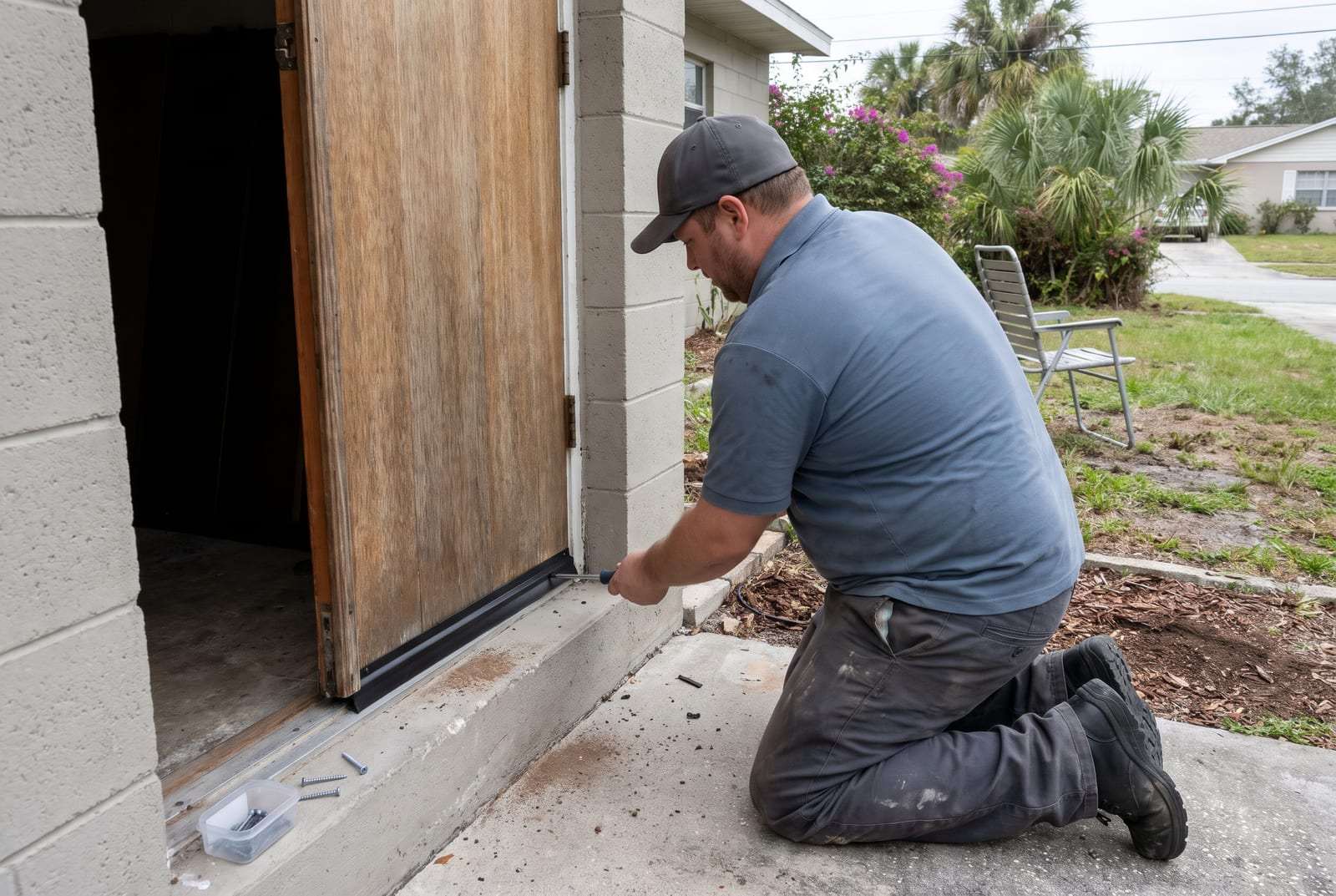
- Start at the doors. With the lights off inside, look for daylight under and around each outside door. Replace worn sweeps and weatherstripping, and the rubber seal along the bottom of the garage door.
- Seal the pipe and cable gaps. Fill small gaps around pipes, cables and the dryer vent with a flexible exterior sealant. Pack larger ones with copper mesh first and seal over it, so rodents cannot chew through.
- Screen vents and weep holes, never seal them. Soffit, attic and crawlspace vents need air, and weep holes need to drain. Repair torn screens with metal mesh instead of closing the opening.
- Fix leaks first. A drip under a sink, a sweating pipe or an air conditioning drain pooling by the house gives roaches and termites the water they need.
- Move water away from the house. Point downspouts away from the foundation, keep gutters clear and set irrigation heads to water the beds rather than the walls.
- Open up the space by the walls. Trim shrubs back about a foot from the house, keep mulch thin and pulled back, and store firewood, lumber and boxes off the ground.
- Check your work after a storm. The first heavy rain of the season shows where water pools. Walk the house the next morning and fix what it shows you.
Some gaps sit high on the roofline, inside a wall or past what sealant can fix, and those are a job for a roofer or a handyman. If pests keep turning up after you have sealed what you can reach, book an appointment and we will find where they are getting in and where they hide.
If your monthly walk turns up droppings, mud tubes or wings on the sills, call and tell us where.