
Termite Control in Orlando
Termites rarely show themselves, so it pays to know the early signs: mud tubes, shed wings, tiny pellets and soft wood.
Central Florida homes face two kinds of termites. Subterranean termites, the native Eastern kind and the larger Formosan colonies, live in the soil and reach the house through mud tubes and cracks. Drywood termites need no soil at all: they live inside the wood itself, in attic framing, window frames and furniture.
Both eat wood from the inside and leave the surface whole, so the damage hides behind drywall, baseboards and stucco. A slab home with stucco over block is still at risk, and an older home on a crawlspace offers even more wood near the ground.
Termite Signs Around the House
Each sign points to a different kind of activity. Finding one is a reason to look closer, not to tear into a wall.
| Sign | What It Looks Like | Where to Look | What It May Mean | What to Do Next |
|---|---|---|---|---|
| Mud tubes | Pencil-wide tunnels of soil running up a surface | Slab edge, block walls, crawlspace piers, cracks in the stucco | Subterranean termites traveling between the soil and the wood above | Leave it in place, take a photo and note where it runs |
| Swarmers or shed wings | Ant-sized winged insects coming out at once, or little piles of clear wings all one length | Windows and sills, sliding doors, light fixtures, around tubs and sinks | A mature colony close by, possibly inside the walls | Keep a few in a sealed bag and note the room and the time of day |
| Pellets | Tiny, hard, six-sided pellets like coarse sand, in small piles | Under window and door frames, baseboards, furniture, attic wood | Drywood termites living in the wood right above the pile | Sweep the pile up and see whether a new one forms in the same spot |
| Hollow or soft wood | Wood that sounds papery when tapped or gives under a screwdriver | Baseboards, door and window trim, porch posts, crawlspace joists | Termites feeding inside, or rot from a leak | Probe gently, and check the area for mud lines or pellets |
| Bubbling paint or sagging drywall | Blistered paint or water-stained drywall, sometimes with pinholes | Lower walls, around bathrooms and exterior doors | Subterranean termites behind the surface, or plain moisture damage | Rule out a leak first, then look for pinholes and dried mud |
Subterranean, Formosan and Drywood Termites
The type decides where the colony lives, and so where a treatment has to reach.
| Type | Signs | Where It Lives | How It Spreads |
|---|---|---|---|
| Eastern subterranean | Mud tubes, daytime swarms in late winter and spring, often after rain, damaged wood packed with soil | Underground colonies that reach the wood through mud tubes, slab cracks and gaps around pipes | Swarmers start new colonies; workers tunnel through the soil to any wood that touches it |
| Formosan subterranean | Big evening swarms in late spring, drawn to lights; mud tubes; nests of chewed wood inside walls | Huge colonies in the soil, sometimes nesting in walls or roofs where a leak keeps the wood wet | Swarmers fly toward lights at dusk; colonies also travel in infested timber and landscape wood |
| Drywood | Six-sided pellets, tiny round holes in the wood, swarmers after dark in spring and summer | Inside dry wood with no soil contact: attic framing, window and door frames, furniture | Swarmers fly into attic vents and gaps at the eaves; colonies also move in infested furniture |
A Homeowner’s Yearly Termite Check
Once a year, before the spring swarms, walk the house with a flashlight and a screwdriver:
- Look for mud tubes along the slab edge, the block walls and where pipes enter the house.
- Check where the stucco stops: it should end above the soil with a clear strip you can see, never buried in mulch.
- Pull mulch and soil back so door frames, trim and trellises do not touch the ground.
- Tap the trim near bathrooms, the kitchen sink and exterior doors, and listen for a hollow sound.
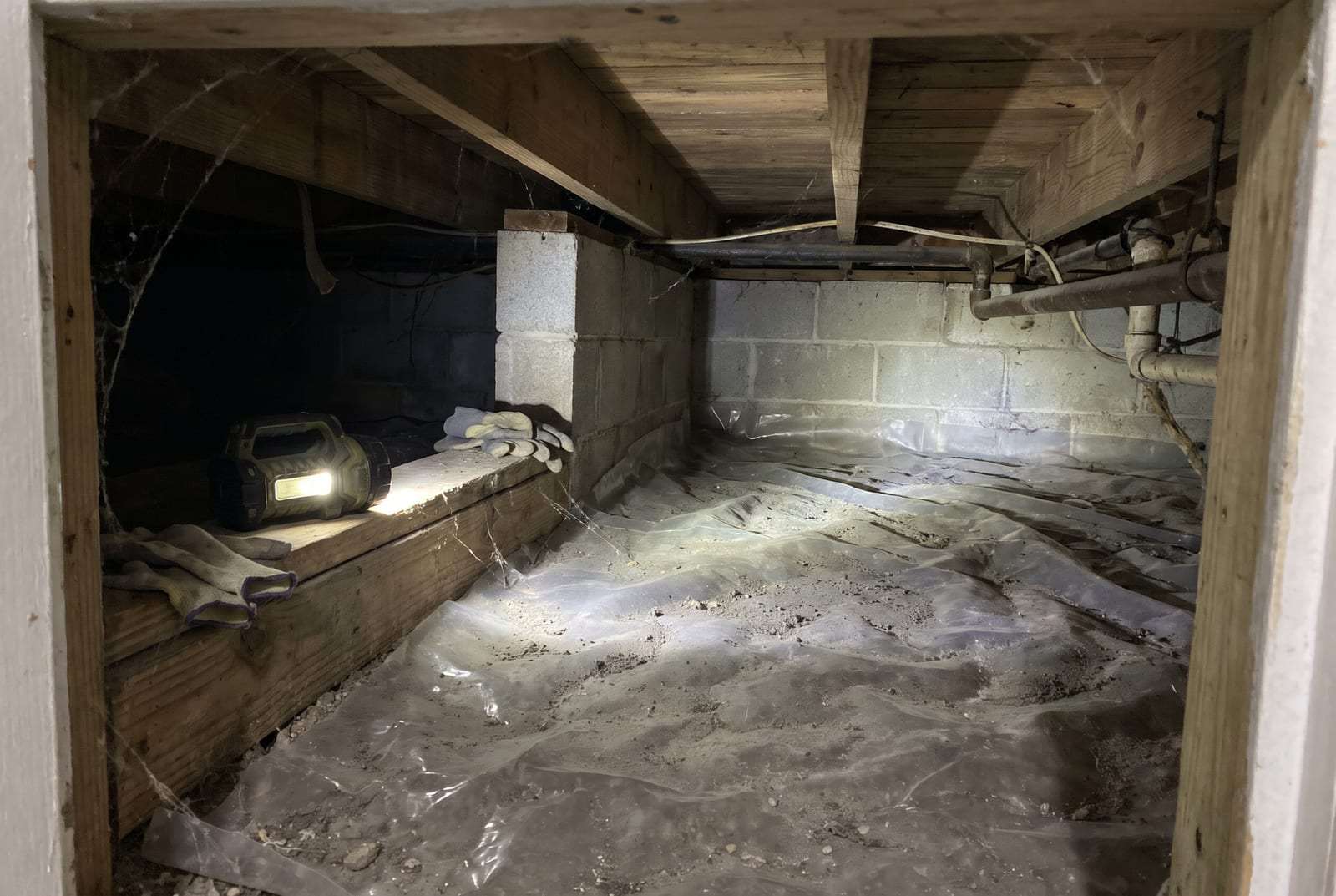
- In a crawlspace home, check the piers, the sill plate and the joists for mud tubes and soft wood.
- In the attic, look at the rafters and the wood around the vents for pellets or small holes.
- Fix leaks, AC drain lines that drip by the wall and sprinkler heads that soak the foundation.
- Move firewood, scrap lumber and cardboard away from the walls and out of garage corners.
If the check turns up a mud tube, a pile of wings or pellets you cannot explain, leave it as it is, take a photo and book an appointment.
Slab Homes, Mulch and Hidden Damage
Can termites get into a slab home?
Yes. Subterranean termites need a gap only about as thin as a credit card. They come up through cracks in the slab, the joints between slab sections and the openings around pipes, then travel inside the walls. Stucco that runs below the soil line hides their tubes from view.
Does mulch attract termites?
Mulch holds moisture against the ground, and moisture is what subterranean termites are after, so a thick layer piled against the wall gives them cover where the house begins. Keep it thin and a few inches back from the foundation, so the slab edge stays dry and in view.
How much damage can termites do before anyone notices?
More than most people expect, because the surface stays whole while the wood inside is eaten. Eastern subterranean colonies usually work slowly, which is why a yearly check is worth the time, while Formosan colonies are far larger and do more damage in less time.
Do swarmers inside mean termites are in the walls?
Often, yes. Swarmers coming out of baseboards, around a tub or through cracks in the floor usually come from a colony in or under the house. A few that flew in through an open door at dusk may come from outside, but a colony is still close.
Soil Treatments, Bait Systems and Tenting
Whatever the method, the work starts with finding where the termites are working and how they reach the wood. For subterranean termites the trade has two main approaches. A liquid soil treatment creates a continuous treated zone in the soil along the foundation and around the pipes that pass through the slab, so termites crossing it are killed or kept out. A bait system places stations in the soil around the house; termites feed on the bait and carry it back, which works on the whole colony over time.
Drywood termites are treated where they live. A small infestation in a door frame or a run of trim can be treated on the spot, right into the galleries. When colonies are spread through the attic or hidden in several rooms, the trade turns to whole-structure treatment: the tent fumigation that covers an entire house.
Store-bought termite sprays kill the termites you can see, not the colony behind them. Which treatment fits depends on the termite, the way the house is built, how far the activity has spread and how easy it is to reach. The same things shape the cost, which is one reason termite work is planned differently from routine pest control.
If you have found mud tubes, wings or pellets, call and tell us where.