
Our Work
Roach jobs, wasp nests and insects gathering indoors each call for their own kind of work.
Most of our calls in Orlando are about cockroaches: the big American roaches people here call palmetto bugs, which wander in from the yard, and German roaches, which settle into kitchens and bathrooms. The rest of the work covers ants, termites, rodents, spiders, wasps, fleas, bed bugs and mosquitoes, in houses, condos, apartments and townhomes as well as restaurants, offices and small shops. Some jobs are a single visit about one problem; others are recurring service that keeps pests out year-round. All of it falls under our four pest control services.

Gel Bait Where German Roaches Hide
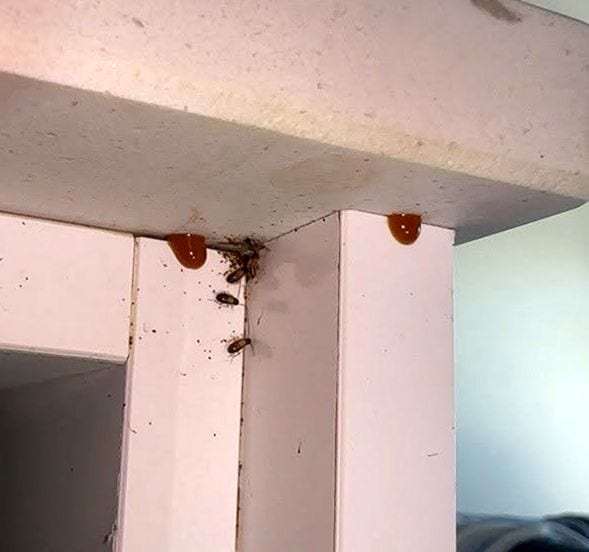
A German roach job is mostly careful looking in the kitchen. With a flashlight, the signs lead to where the roaches pack in: droppings like ground pepper, dark smears at cabinet corners, and egg cases and shed skins along the hinges, behind the stove and in the gaps around the dishwasher. In the trade, gel bait usually goes into those cracks in small drops, where the roaches gather but nobody reaches in or wipes. The roaches feed on it and carry it back to the hiding spot, so sprays and strong cleaners have to stay away from the drops: they put the roaches off the bait.
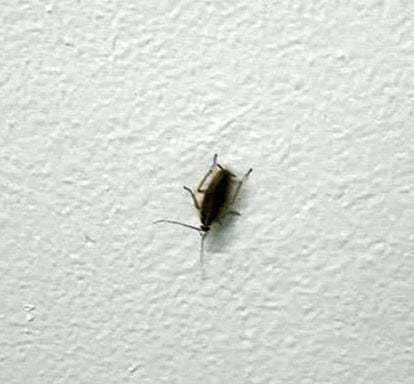
Roach work does not stop at the kitchen. Roaches travel along walls, behind baseboards and through the gaps around pipes, so the work follows them from the wall where one turned up to the bathroom, the laundry and the garage, then outside to the doors, the drains and the mulch along the foundation. With palmetto bugs, which come in from the yard, that outside half matters most. Every roach job starts the same way for us: finding where they get in and where they hide, then treating those spots rather than spraying everywhere.
Wasp Nests Started Above Windows and Doors
A paper wasp nest often starts where it is hard to see from the ground: under a sunshade, behind a shutter, inside the lip of a gutter or at the top of a window frame. It begins as a few open cells about the size of a coin and can grow to the size of a hand by late summer. Paper wasps are slower to sting than yellowjackets, but they defend a nest that someone bumps.
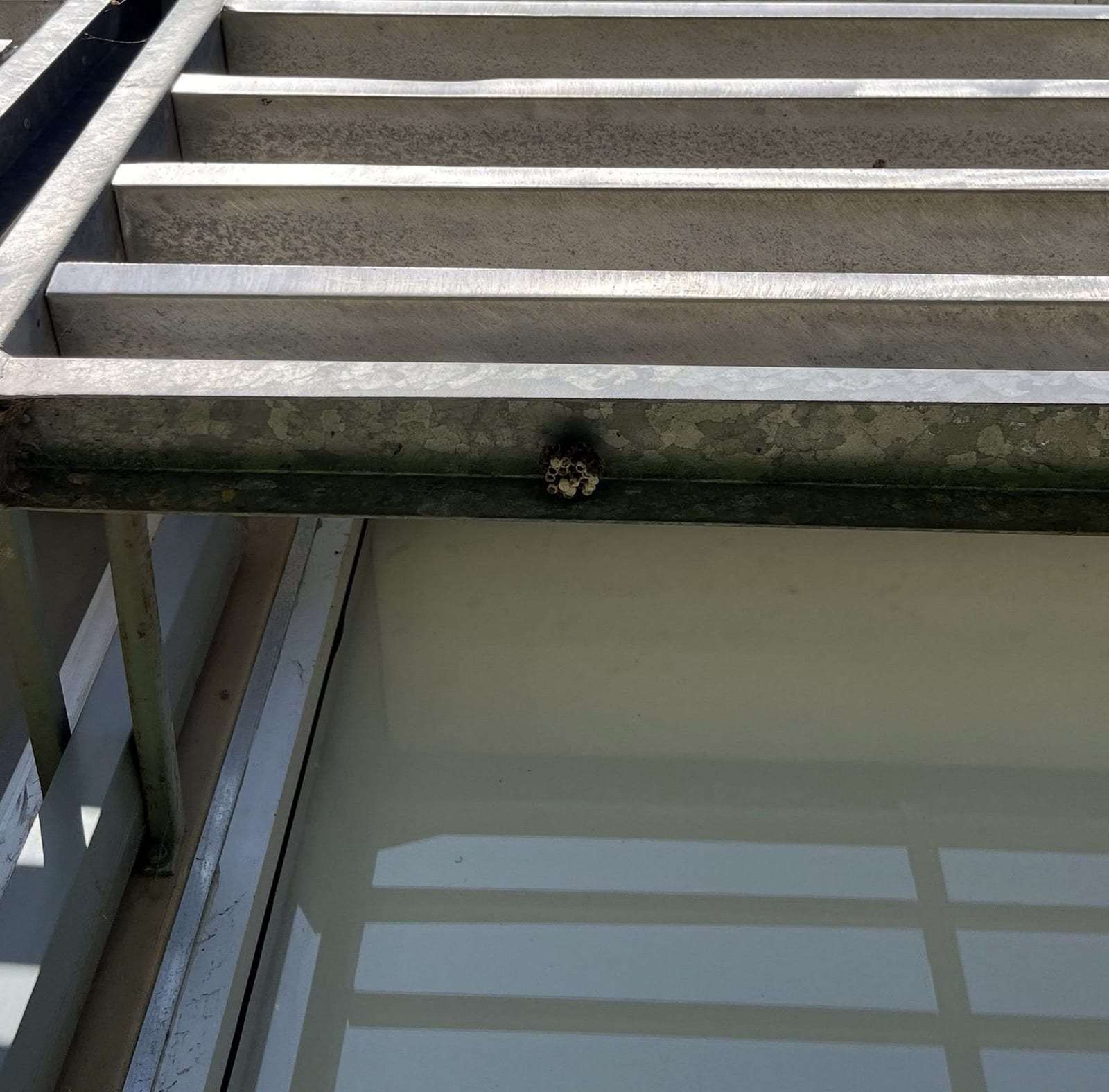
Wasp work is mostly about timing and footing. Nests are usually dealt with early or late in the day, when the wasps are settled on the comb, and the comb comes down afterward. For a homeowner the worst risk is often the ladder rather than the sting, because a person stung at the top of one can fall. Nests over a door, a window that opens or a walkway come first; one high on a wall nobody passes may be left alone. The sheltered spots that suited one nest will suit the next, so the same sunshades and eaves are worth a look each spring.
Insects Clustered in a Ceiling Corner
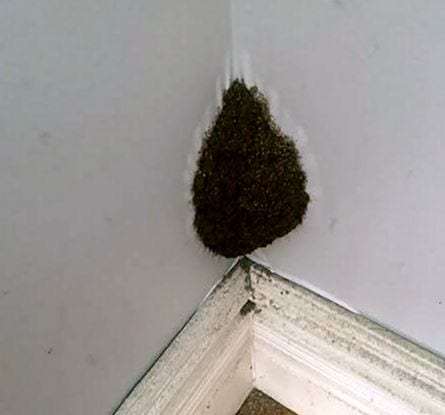
A dense cluster of small dark insects in a ceiling corner can have several causes, and each calls for a different answer. So the first job is working out what the insects are and where they came from, before anything is treated. That starts up close, with the body shape, the wings, the legs and the antennae, ideally with a few insects saved in a sealed bag or jar. Then come the questions: are they alive or dead, did they appear all at once or build up over days, and do they come from a light fixture, the attic hatch, a gap at the crown molding or a window frame?
The answers point to the source. Insects that swarm out all at once often gather at a window or a light because they are trying to get outside, and the nest they came from may be in the attic or inside a wall. Others wander in through a gap from outside. Spraying the cluster before then kills the insects in view and leaves the source alone, and the next cluster forms in the same corner.
If you are finding something like this at home, book an appointment and tell us where you see it and when it started. Afterward we explain what we found, what we did and what to watch for.
Call us about the pest you are seeing, whatever it is.