
Mosquito Control in Orlando
Most mosquitoes biting in an Orlando yard grew up in water close by, so finding that water comes first.
Mosquitoes need only a little standing water to breed, and Central Florida’s summer rains fill every bucket, saucer and clogged gutter in the yard. In the heat, eggs can become biting adults in about a week, so a yard that felt fine in May can be hard to use by July.
Two kinds cause the trouble around most homes. Small black-and-white Aedes mosquitoes breed in containers, stay close to where they hatch and bite in daylight, mostly in shade. Brown Culex mosquitoes breed in larger standing water, such as ditches and pond edges, and bite from dusk into the night. Either way, the work comes down to the water they breed in and the shady plants where the adults rest.
Breeding Spots Around an Orlando Home
Aedes lay their eggs on the inside wall of a container, just above the waterline, and the eggs can sit dry for months until the next rain reaches them. Anything that holds water for a week can raise a batch:
| Source | Why Mosquitoes Use It | How to Fix It |
|---|---|---|
| Bromeliads | The cups at the center of the leaves hold water for weeks | Flush the cups with a hose once a week, or move the plants away from doors and the lanai |
| Plant saucers | A thin layer of water under a pot is enough for a batch of larvae | Empty them after watering or rain, or fill them with sand |
| Clogged gutters | Leaves dam the water, and the shaded trough stays wet between storms | Clean them out and check that the downspouts drain |
| Pool covers and tarps | Rain collects in folds and sags, often out of sight | Pump or sweep the water off, pull covers tight, fold tarps away |
| Kids’ toys and buckets | Sand toys, wagons, buckets and wheelbarrows catch rain and get forgotten | Turn them over or keep them in the garage or a shed |
| Bird baths and pet bowls | Still water that sits for days, often in the shade | Tip out, scrub and refill them twice a week |
| Lanai and pool deck drains | Clogged drains and low corners hold water inside the screen, right where people sit | Clear the drains and sweep puddles off the deck after rain |
| Low spots after summer rain | Puddles in the lawn or by the driveway that last more than a few days | Fill them with soil and fix sprinkler heads that keep soaking the same patch |
| Trash bins and old tires | Lids and tires hold rain in warm, dark pockets | Keep lids shut, tip out water after storms, get rid of old tires |
Bites at Dusk, After Rain and by the Pool
Are mosquitoes worst at dusk and dawn?
For Culex and many others, yes: they bite most from dusk into the night and again around dawn. The small striped Aedes mosquitoes are different. They bite in daylight, mostly in shade, so a shady corner of the yard can be just as bad in the middle of the afternoon.
Why do mosquitoes get worse a few days after a big storm?
Heavy rain floods containers and hatches eggs laid at the waterline weeks earlier. In summer heat the larvae become biting adults in about a week, so the jump in bites follows the storm by several days. Emptying containers soon after heavy rain breaks the cycle.
Does a screened lanai keep mosquitoes out?
Only when the screen is whole and the doors stay shut. Small tears and gaps around the screen door let them in, and water standing inside the screen, in plant saucers or a clogged deck drain, lets them breed right where you sit. A fan helps too, because mosquitoes are weak fliers.
Can mosquitoes breed in a swimming pool?
Not in a pool that is running and kept clean: the pump keeps the water moving and the chemistry keeps it clear. A green pool left alone for weeks, rainwater sitting on a pool cover or a fountain with a dead pump is another matter.
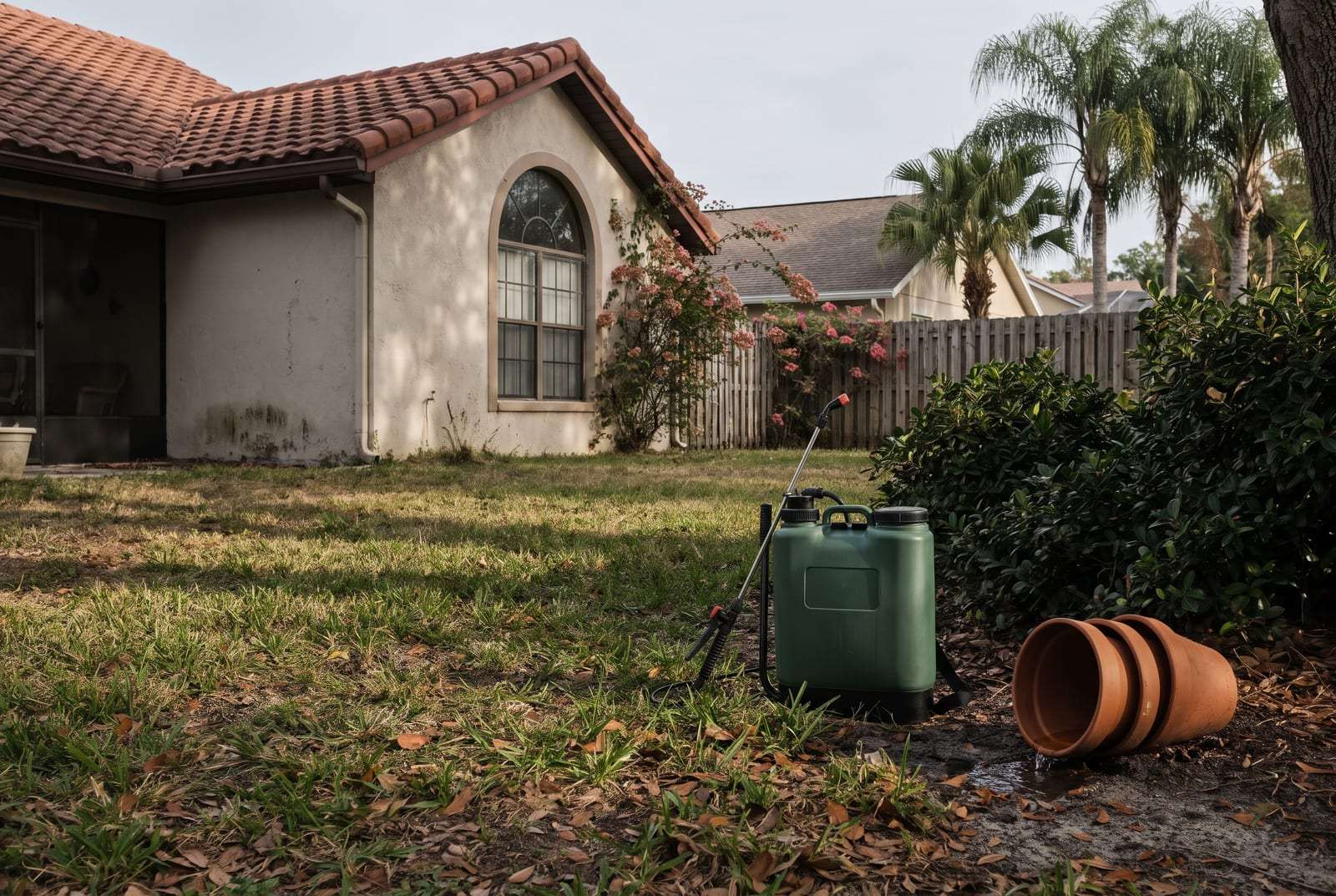
A Weekly Standing-Water Sweep
Once a week, and again after a heavy storm, walk the property in this order:
- Pick a set day. Eggs become biting adults in about a week of summer heat, so a weekly round empties every container before a batch can finish.
- Start up high. Check the gutters and downspouts for packed leaves and standing water.
- Walk the yard edge. Tip out buckets, toys, wheelbarrows and saucers, including the ones pushed under shrubs and behind the shed.
- Flush the bromeliads. Run the hose into the center cups until the old water spills out.
- Scrub what you empty. Wipe the inside of bird baths and pet bowls before refilling, since the eggs cling just above the waterline.
- Finish at the pool and lanai. Clear the deck drains, pump water off the cover and check the screen for tears.
- Note what you cannot fix. A neighbor’s tarp, a ditch or a retention pond behind the fence may be where the mosquitoes come from, so mention it when you call.
If the bites keep coming after a few weeks of sweeps, the water is likely somewhere hard to see, such as a buried drain, a tree hole or a tarp next door; book an appointment and we will look for it.
Yard Habits That Keep Mosquito Numbers Down
Small changes in how the yard is kept take away the shade and water mosquitoes need:
- Trim shrubs and thin out dense ground cover, since adult mosquitoes rest in cool shade by day.
- Keep the grass mowed and the weeds cut along fences, the pool cage and the AC unit.
- Water the lawn early in the morning and only as long as it needs, so no puddles linger.
- Keep window screens, lanai screens and screen doors patched and closed.
- Run a fan on the lanai or porch when you sit outside.
- Keep the pool running and clean, and keep rainwater off the cover.
- Wear long sleeves and an insect repellent at dusk and in shady spots.
- Store toys, buckets and tarps under a roof or upside down.
These habits count most from late spring into fall, while the rainy season runs. A month-by-month upkeep routine keeps them on the calendar through the dry months as well.
Tell us which part of the yard you have stopped using, and we will start looking for the water there.