
Rodent Control in Orlando
Rats and mice leave droppings, gnaw marks and noises long before anyone sees one, and those signs lead back to the gaps they use to get in.
Roof Rats, Norway Rats and House Mice
Three kinds of rodent get into homes here. Roof rats are slender, dark climbers with long tails; they travel along power lines, fences and branches and nest high, in attics and soffits. Norway rats are heavier and brown and burrow at ground level, along foundations and under woodpiles. House mice are the smallest and settle in kitchens, garages and the spaces inside walls.
In Central Florida, palms and citrus trees give roof rats an easy climb to the roofline and plenty to eat once they are up there. As with every pest we handle, the work starts with where they get in and where they hide.
Signs of Rats and Mice Around the House
Rats and mice keep out of sight, so the signs usually turn up first.
| Sign | Where It Appears | Likely Rodent | Urgency |
|---|---|---|---|
| Droppings about half an inch long, with pointed ends | Attic insulation, tops of walls, beside stored boxes | Roof rat | Call soon |
| Thicker droppings with blunt ends | Garage floor edges, along the slab, near trash cans | Norway rat | Act this week |
| Droppings the size of rice grains | Kitchen drawers, pantry shelves, under the sink | House mouse | Act this week |
| Scratching and quick runs overhead after dark | Ceilings near the eaves | Roof rat; mice sound lighter | Call soon |
| Chewed insulation on electrical wires | Attic, garage, behind appliances | Rats or mice | Act today: a fire risk |
| Holes two to four inches wide in the soil | Along the foundation, under shrubs and woodpiles | Norway rat | Call soon |
| Oranges hollowed out on the tree | Citrus trees and the ground beneath them | Roof rat | Watch and note |
Fresh droppings are dark and shiny; old ones are dull, gray and crumbly. Do not touch either with bare hands. A rat out in the open in daylight often means a crowded nest nearby.
What is making noise in my ceiling at night?
Scratching and quick runs after dark near the eaves usually mean roof rats. Mice make lighter, quicker sounds and turn up lower in the house too. A gnawing sound that keeps coming from one spot means something is chewing wood or wire there, so note where it is.
How can I tell rat droppings from mouse droppings?
By size. Mouse droppings are about as big as a grain of rice and lie scattered along their routes; rat droppings run from about half an inch to three quarters of an inch. Roof rat droppings have pointed ends, Norway rat droppings blunt ones. Specks like ground pepper are roach droppings, a job for general pest control.
Checking the Attic Without Breathing the Dust
The attic is where roof rats nest and where their signs collect. In summer, go up early in the morning: an Orlando attic can be dangerously hot by midday.
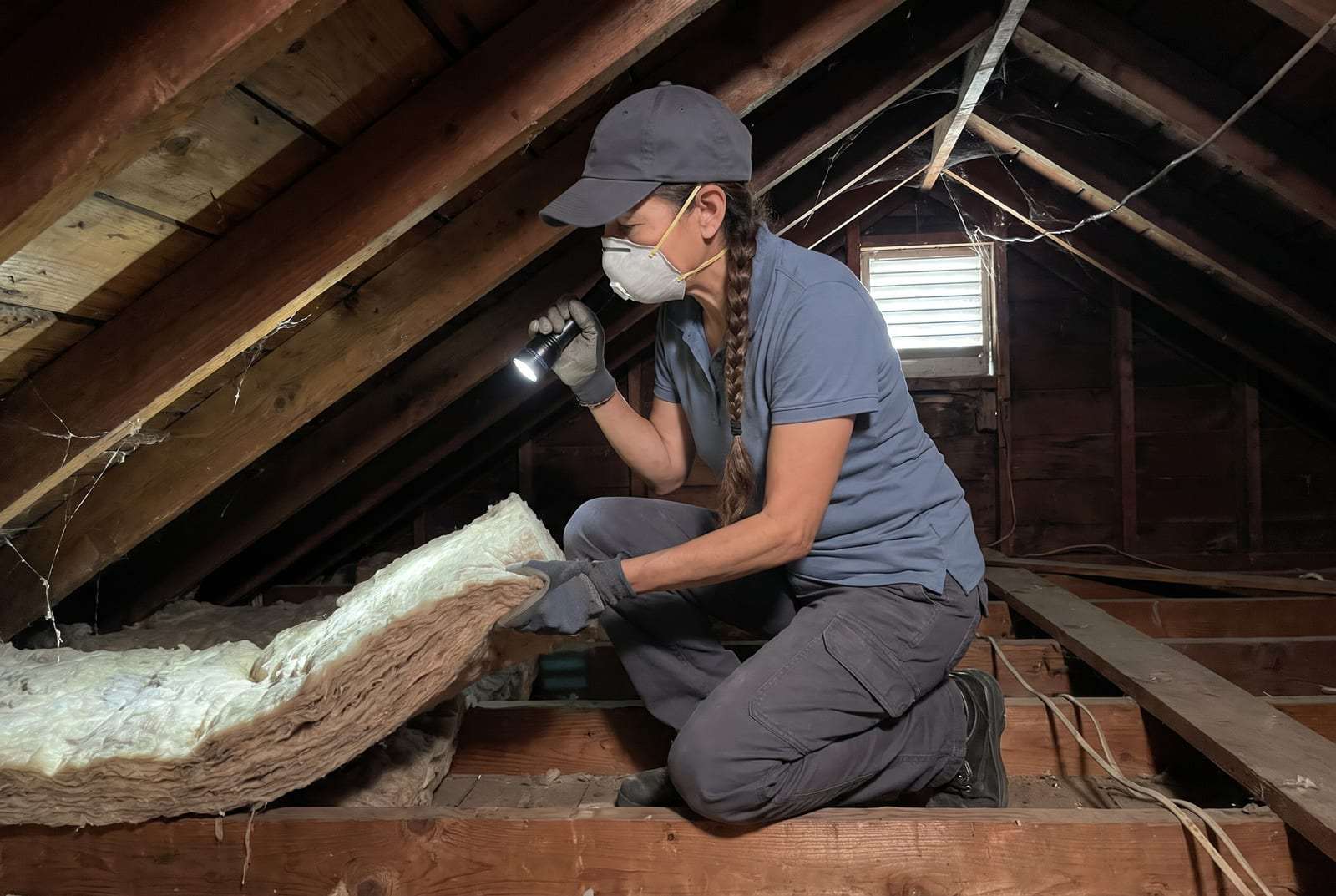
- Dress for the dust. Put on gloves, a well-fitting dust mask and long sleeves, and take a bright flashlight.
- Step only on the framing. Keep your feet on the joists or on boards laid across them; the ceiling between them will not hold you.
- Light the edges first. Shine the flashlight along the eaves and around vents and pipes, looking for paths pressed into the insulation, shredded nesting material and greasy marks on the rafters.
- Never sweep droppings dry. Sweeping or vacuuming puts their dust in the air. Soak them with disinfectant first, wait about five minutes, then wipe them up with paper towels.
- Check the wiring by eye. Look for chewed wire insulation without touching it, and have an electrician look at any damage.
- Note what you found. Take photos of the signs and where they are, then wash your hands well once your gloves are off.
Gaps Rats and Mice Use to Get In
A mouse can squeeze through a gap about a quarter inch wide, and a young rat through one about half an inch wide. Most of these gaps sit where something passes through the wall or where two parts of the house meet.
| Area of the Home | Typical Gap | How to Check |
|---|---|---|
| Roofline and soffits | Loose soffit panels; gaps where the soffit meets the fascia | Walk around the house and look along every eave for dark gaps or rub marks. |
| Gable vents | Torn or rusted screen behind the louvers | From the attic, shine a light at the back of each vent. |
| AC line and plumbing penetrations | Open space around refrigerant lines, drain pipes and hose bibs | Look where each line enters the wall: if a pencil fits, a mouse fits. |
| Garage door corners | A worn bottom seal and open corners at the frame | Close it on a sunny day and look for daylight at the bottom corners. |
| Dryer vents | A flap that sticks open or a cracked hood | Check that the flap falls shut, and look for nest material in the hood. |
| Weep holes and utility chases | Open holes in brick veneer; unsealed spots where cable, power and gas lines come in | Check the base of brick walls and each spot where a line enters. |
| Roof-to-wall joints | Gaps where a lower roof or a porch roof meets a wall | From the attic, look along the joint for daylight. |
In the trade, rodent work usually pairs two jobs: trapping the animals already inside and closing the gaps they use. The order matters. Gaps closed too early leave rats inside to chew new holes or die in the walls; trapping alone leaves the way open for the next ones.
Checking the Garage for Rodents
A garage gives rodents shelter, warmth and often food. Rats and mice run along walls rather than across open floor, so the walls are where to look.
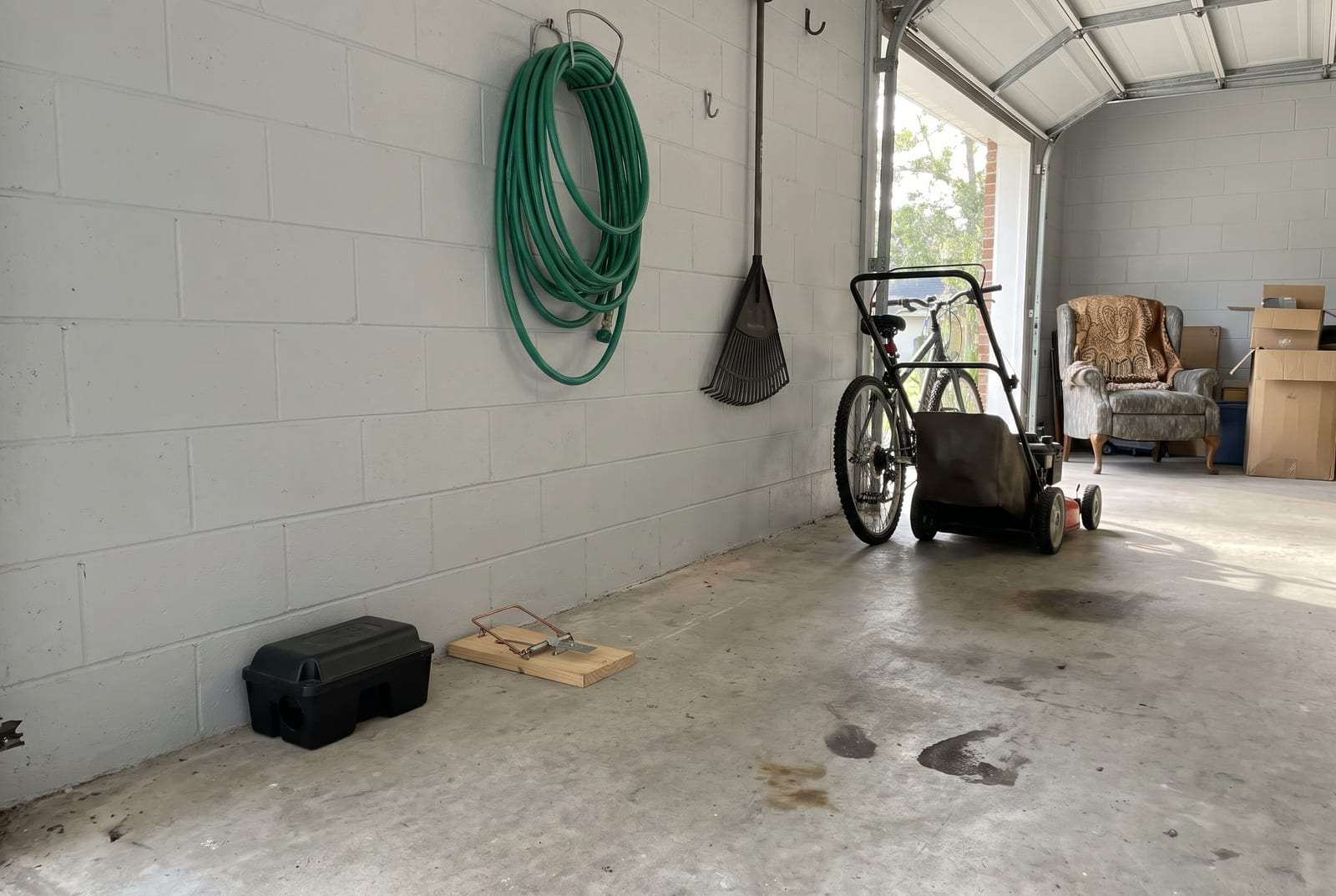
- Start along the walls. With gloves on, run a flashlight along the base of each wall and behind the shelving, looking for droppings and gnaw marks.
- Check stored food and seed. Pet food, birdseed and grass seed in bags are often the first things rodents find.
- Look into the warm corners. The spaces behind a water heater, a dryer or a second refrigerator are favorite nesting spots.
- Wet it before you wipe it. Spray any droppings with disinfectant until soaked, wait about five minutes, then pick them up with paper towels and bag them. Never sweep or vacuum them dry.
Can rodents make my family or pets sick?
They can carry germs in their droppings, urine and saliva, and fleas and mites ride in on them. That is the reason for gloves, a mask and wet cleanup instead of sweeping. Anyone who feels unwell after cleaning up after rodents should mention it to a doctor.
What should I do with food a rodent may have touched?
Throw away anything in a bag or box with chew marks, and any food that was left out. Wash unopened cans and sealed jars with soapy water before you use them, and wash dishes from a cabinet with droppings in hot, soapy water.
Taking Away Food and Shelter
Rodents stay where food and cover come easily. These changes make a house and yard far less inviting:
- Pick up pet food at night, and keep pet food and birdseed in bins with tight lids.
- Gather fallen fruit from citrus trees and palms every few days.
- Take bird feeders down, or hang them well away from the house.
- Clear garage clutter: lift boxes onto shelves and leave a gap between stored things and the walls.
- Trim tree branches and palm fronds several feet back from the roof.
- Keep woodpiles and lumber off the ground and away from the walls.
If droppings or noises keep turning up after the food and clutter are gone, the rodents are probably nesting inside. When you book an appointment, tell us what you found and where.
Rats and mice settle in quickly, so call when the scratching or the droppings first start.