
General Pest Control in Orlando
We handle the roaches, ants, spiders and other insects that move into Orlando homes, starting with where they get in and hide.
Roaches lead the list here: most of our Orlando calls are about the big American roaches people call palmetto bugs, which wander in from outside, and German roaches, which settle into kitchens and bathrooms. Warm weather nearly all year, heavy summer rains and humid air give neither one an off season.
General pest control also covers ghost ants and fire ants, spiders, silverfish, paper wasps, fleas and bed bugs. For each one we find where it gets in and hides, treat those spots rather than spraying everywhere, and tell you what to watch for afterward.
A Roach on the Wall in Daylight
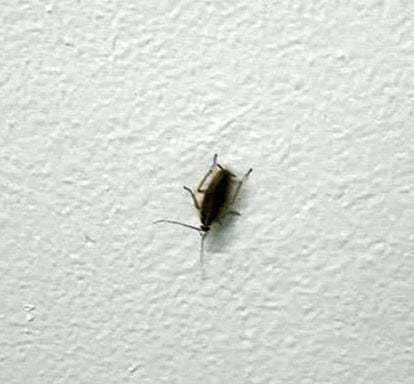
Roaches spend the day packed into dark gaps and come out to feed after dark, so one on a wall in daylight is worth a closer look. It may be a stray from the yard, or a sign that the hiding spots nearby are already full.
Size alone does not settle which roach it is, because young palmetto bugs are small and brown too. Look for two dark stripes on the shield behind the head, the mark of a German roach, and note the room where you saw it. A striped roach out in the open indoors is a good reason to book an appointment before the numbers climb.
Palmetto Bugs, Ghost Ants and Other Household Pests
Each of these pests leaves its own signs. Ants are the trickiest: a spray that kills one kind makes another split into new nests, so it pays to know which ant you have before reaching for a can.
| Pest | How to Recognize It | Where It Hides | Common Signs | First Steps for Homeowners |
|---|---|---|---|---|
| American roach (“palmetto bug”) | Reddish brown, about an inch and a half long, a pale band behind the head | Mulch, palms, sewer lines, crawlspaces, garages, floor drains | Big roaches at night in bathrooms and garages, more after heavy rain | Seal gaps under exterior doors, keep drain covers on, pull mulch back |
| German roach | About half an inch, light brown, two dark stripes behind the head | Kitchen and bathroom cabinets, behind the fridge, appliance hinges | Roaches out in daylight, droppings like ground pepper, a musty smell | Fix drips under sinks, wipe grease off the stove, seal food away |
| Ghost ant | Tiny, with a dark head and pale, almost see-through legs and abdomen | Wall gaps, potted plants, behind baseboards | Thin trails along counters, sinks and tubs, ants at sweets | Wipe trails with soapy water instead of spraying them |
| Fire ant | Reddish brown, mixed sizes, quick to swarm when disturbed | Mounds of loose soil in sunny lawns and along sidewalks | New mounds after rain, stings that turn into small white blisters | Keep children and pets away, wear shoes in the yard, never kick a mound |
| Spiders | Tangled webs indoors; outdoors, orb weavers and brown widows | Garage corners, lanai screens, eaves, under outdoor furniture | Webs in corners and under eaves, egg sacs, spiders by outdoor lights | Sweep webs down, wear gloves to move stored things, use yellow bulbs by the doors |
| Silverfish | Silvery, carrot-shaped and wingless, with three bristles at the tail | Bathrooms, closets, attics, paper and cardboard | Small holes and yellow stains on paper, book bindings and wallpaper | Bring the humidity down, store papers in plastic bins |
| Fleas | Tiny, dark brown, flattened side to side, jumping | Pet bedding, rugs, sofas, shady spots where pets lie | Pets scratching, itchy bites on the ankles, black specks that turn red on a wet paper towel | Ask the vet about treating the pets, wash their bedding hot, vacuum often |
German Roaches in Kitchens and Bathrooms
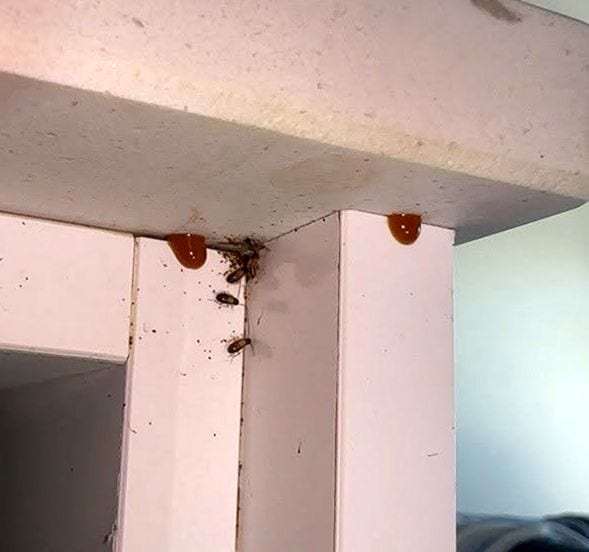
German roaches rarely live outdoors. They arrive in grocery bags, boxes and used appliances, then settle where it is warm and damp and food is close: cabinet hinges, the back of the fridge, the motor under a dishwasher. A female carries her egg case until it hatches, so a few roaches become many in a matter of weeks, above all in apartments and restaurant kitchens.
Store-bought sprays tend to scatter them deeper into the walls, the next cabinet or, in an apartment, the next unit. That is why German roach work in the trade usually relies on small placements of bait in the cracks where they gather. Water matters as much as food, so a slow drip under the sink keeps them going.
Bug Bombs, Bed Bugs, Fleas and Spiders
Do bug bombs get rid of roaches?
Not the ones that matter. The mist settles on open surfaces while German roaches stay tucked in hinges, wall gaps and appliance motors, and many move deeper. Foggers can also catch fire near a pilot light.
How can I check a bed for bed bugs?
Run a flashlight along the mattress seams, the box spring and the headboard. Bed bugs are flat, rust-colored and the size of an apple seed, but their signs often show first: tiny dark spots, pale shed skins and small blood smears on the sheets.
Can fleas show up in a house with no pets?
Yes. Flea pupae can wait in carpets and floor cracks for weeks and hatch when people move in, so an empty rental can have fleas soon after new tenants arrive. Raccoons, opossums and stray cats under a porch can also bring them close.
Are the spiders in Orlando homes dangerous?
Most house spiders are harmless and eat other insects. The ones to respect are the widows: brown widows under outdoor furniture and pot rims, black widows in sheds and woodpiles. Wear gloves when moving stored things, and get medical help if someone is bitten and feels unwell.
Paper Wasps Under Eaves and Sunshades
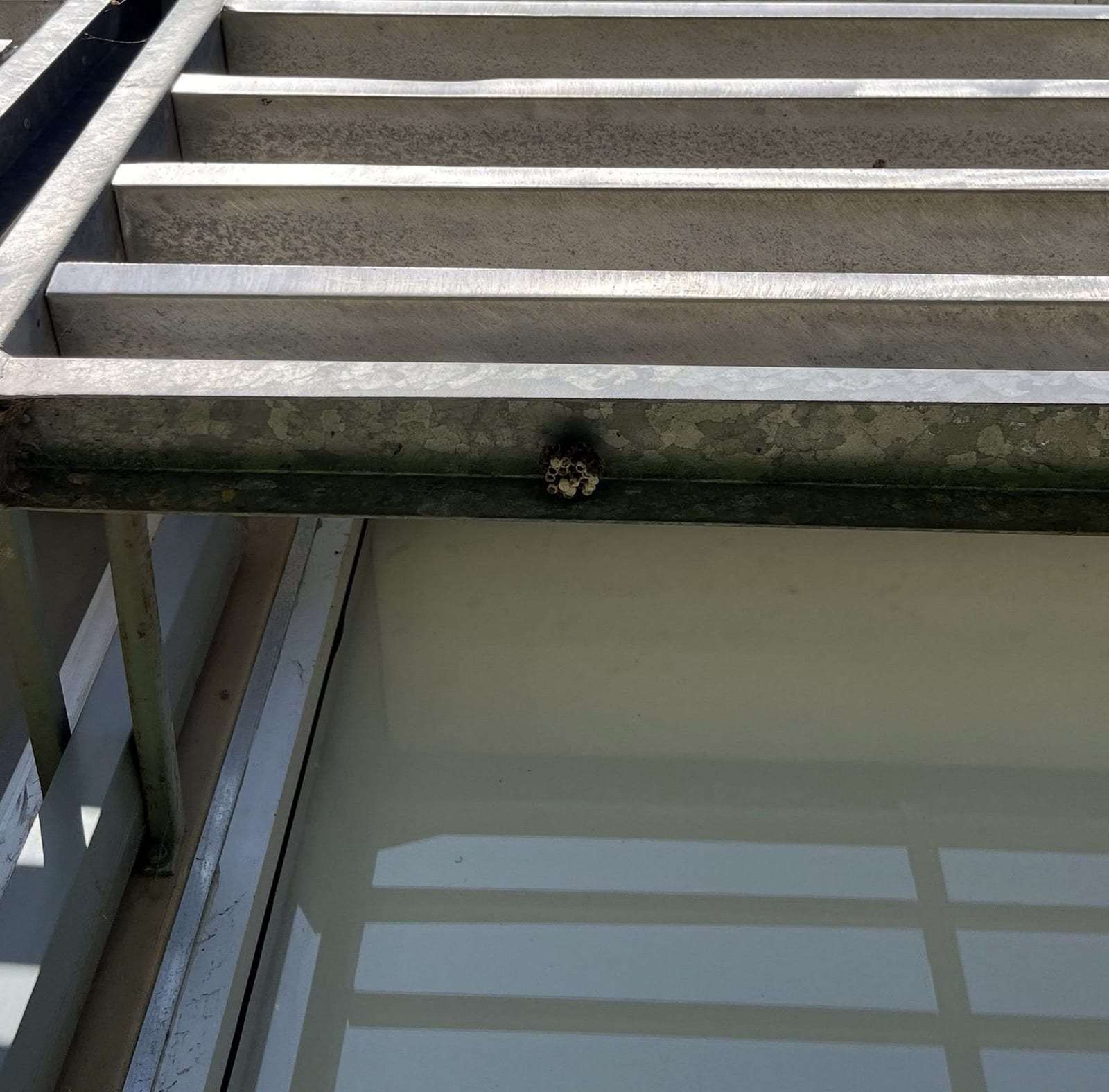
Paper wasps hang their open gray combs wherever there is shade and a dry ceiling: eaves, window sunshades, lanai frames, light fixtures, the underside of a play set. A nest started in spring by one or a few queens can hold dozens of wasps by late summer, all ready to defend it.
A nest by a door or a window is worth dealing with while it is small, but not with a broom or a hose: knocking it down sends the wasps after whoever is closest. Keep children and pets back, and keep anyone allergic to stings well away.
House Conditions That Invite Pests
Pests move in where they find water, food and a way through. Around the house, these are the conditions that draw them:
- Leaky faucets, sweating pipes and an AC drain line dripping by the wall: water for roaches and silverfish.
- Gaps under exterior doors and around pipes and cables where they pass through the wall.
- Thick mulch against the foundation, kept wet by sprinkler heads.
- Palms, shrubs and vines touching the walls or the roof.
- Pet food left out overnight, and crumbs and grease behind the stove.
- Cardboard and stacks of paper in the garage, closets and attic.
- Bright lights by the doors, which draw insects and the spiders that hunt them.
Most of these take minutes to fix and matter more once the summer rains start. A routine for the wet and dry seasons keeps them from piling up again.
Call and tell us where the roaches, ants or spiders are turning up.